


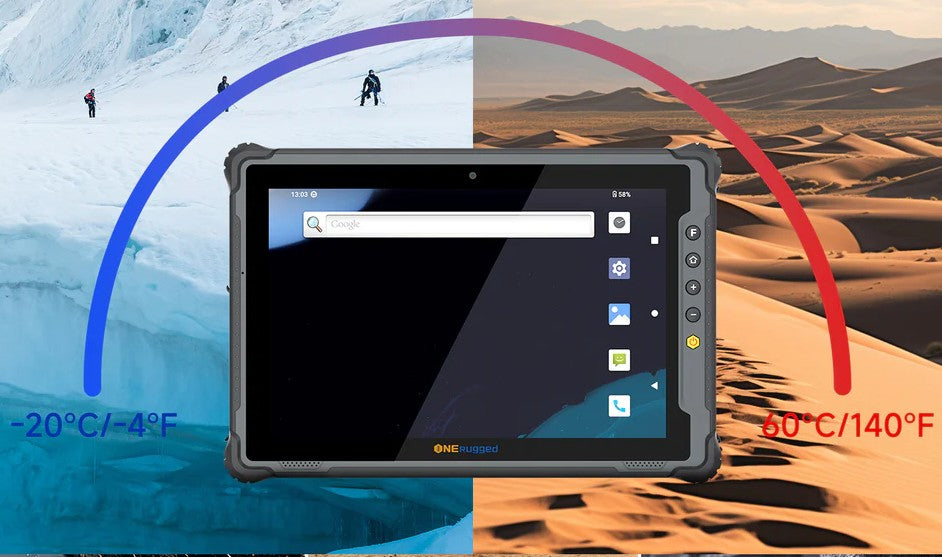
Operating Temperature Range: Why It Matters for Rugged Tablets and Handhelds
Operating temperature range is often overlooked when selecting rugged devices, yet it is one of the most critical specifications for field reliability.

This article explains operating temperature range, how it affects rugged electronics, and why it matters for industrial applications.
1. What Is Operating Temperature Range?
It defines the minimum and maximum temperatures at which a device can operate reliably without performance degradation.
2. Standard vs Rugged Temperature Ranges
① Consumer devices: 0°C to 35°C
② Rugged devices: -20°C to +60°C (or wider)
3. Effects of Extreme Cold
① Battery capacity loss
② Slower screen response
③ Component contraction
4. Effects of Extreme Heat
① CPU throttling
② Screen discoloration
③ Accelerated component aging
5. How Rugged Devices Handle Temperature Extremes
① Industrial-grade components
② Thermal design optimization
③ Specialized batteries
6. Industries Where Temperature Range Is Critical
① Oil & gas
② Cold storage logistics
③ Mining
④ Outdoor utilities
7. Storage vs Operating Temperature
Storage temperature does not equal operating temperature. Devices must meet both specifications.
Ignoring temperature specifications can lead to premature device failure. Rugged devices are engineered to operate reliably where consumer electronics cannot.



Leave a comment
This site is protected by hCaptcha and the hCaptcha Privacy Policy and Terms of Service apply.