
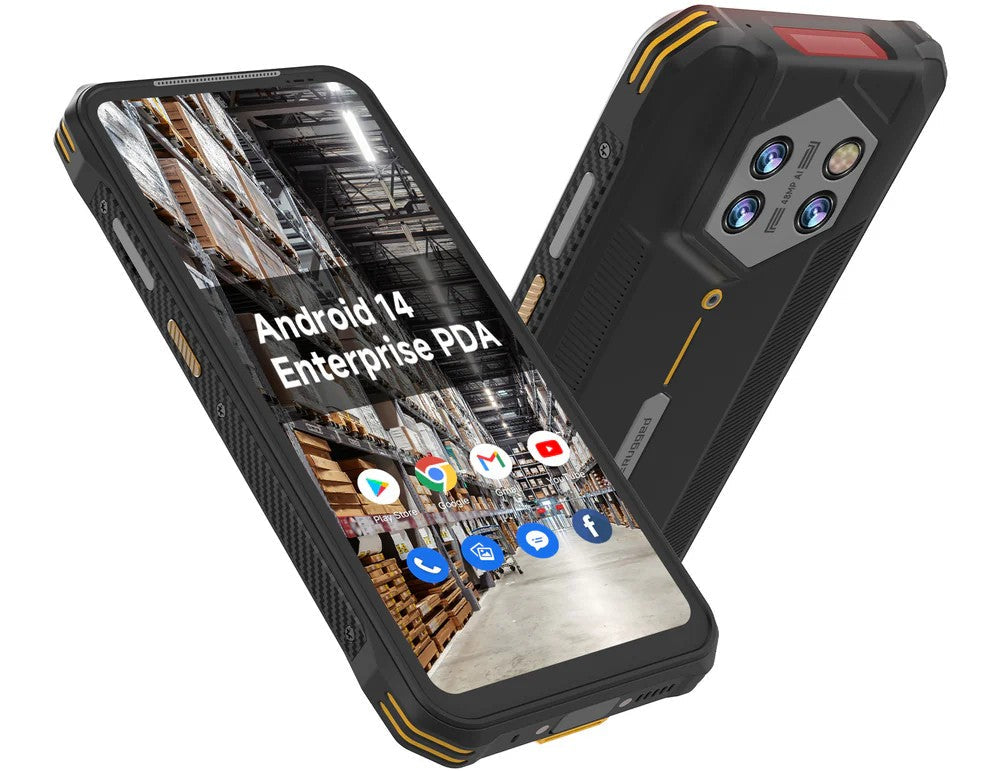
Rugged Phone with barcode scanners can improve data accuracy in industrial workflows
In many industrial and logistics environments, data accuracy depends heavily on barcode scanning. While consumer smartphones can scan barcodes using cameras, they are often slow, inaccurate, and unreliable in demanding conditions. This is why many businesses choose a rugged phone with a barcode scanner for daily operations.

1. Why Camera-Based Scanning Is Not Enough
Smartphone camera scanning has several limitations in industrial settings:
① Slow recognition under low light
② Difficulty scanning damaged or dirty barcodes
③ Poor performance when scanning repeatedly
④ Increased user fatigue
These issues can lead to scanning errors and workflow delays.
2. Advantages of Dedicated Barcode Scanners
①Faster and More Accurate Scanning: Rugged phones often integrate enterprise-grade barcode scanners that can read 1D and 2D barcodes quickly, even when labels are scratched or poorly printed.
② Long-Range Scanning Capability: Some scanners can read barcodes from a distance, which is useful for warehouse shelving and pallet identification.
③ Reduced Error Rates: Dedicated scanners reduce misreads and manual input, improving overall data accuracy.
3. Common Use Cases
Rugged phones with barcode scanners are widely used in:
① Warehousing and inventory management
② Logistics and distribution centers
③ Manufacturing production lines
④ Retail backroom operations
⑤ Field service and asset tracking
For businesses that rely on frequent barcode scanning, a rugged phone with a barcode scanner delivers faster workflows, higher accuracy, and better long-term reliability than consumer smartphones.


Leave a comment
This site is protected by hCaptcha and the hCaptcha Privacy Policy and Terms of Service apply.