

The Origin and Development History of Rugged Phones
Do you know when rugged phones first appeared on the market? Below, we'll take you through the development history of rugged phones (Rugged/Ruggedized Mobile Phones) from several dimensions: origin, technological evolution, market changes, and current trends, giving you a comprehensive understanding of this technology.

I. Origin Stage: The Era of Industrial Walkie-Talkies and Dedicated Terminals (1990s-2005)
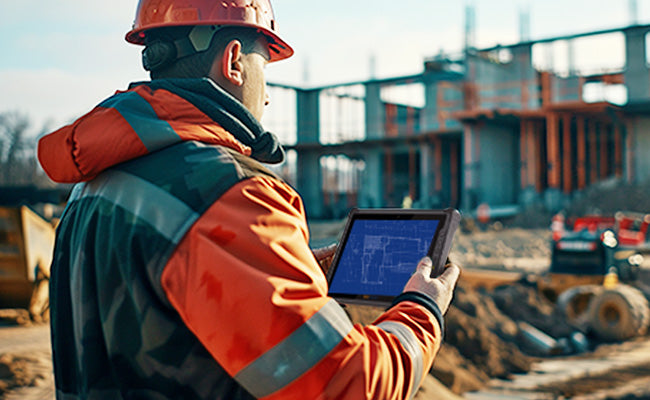
1. Demand Background: The emergence of rugged phones stemmed from the special needs of communication equipment in the industrial, military, and public safety sectors: high temperatures, low temperatures, rain, dusty environments, strong vibrations, frequent drops, and outdoor or hazardous work scenarios (mines, oil fields, construction sites), etc.
2. Early Forms: This period cannot yet be called "smartphones." They were primarily: ruggedized walkie-talkies, industrial handheld terminals, and military communication equipment.
Characteristics: Large size, heavy weight, limited functionality (voice, simple data acquisition), physical buttons + monochrome screen, with "usable and durable" as the core objective.
II. Ruggedness in the Feature Phone Era (2005-2010)
1. Emergence of Commercial Rugged Phones: With the popularization of GSM, some manufacturers began to launch rugged feature phones targeting outdoor users, engineers, and users in extreme environments.
Representative Features: Waterproof, dustproof, and drop-proof (IP54/IP67 and above), rubber edging, reinforced shell, and ultra-long standby time with large batteries; however, screen and system experience were generally not prioritized.
2. Target User Group: Outdoor sports enthusiasts, construction, logistics, and security industries, and specialized jobs (inspection, emergency response)
III. The Beginning of Intelligentization: Windows Mobile / Early Android (2010-2014)
1. Intelligent Systems Enter the Rugged Phone Field
With the rise of smartphones, rugged phones began to incorporate Windows Mobile (early Android).
Key changes during this stage: support for applications began, data collection capabilities were enhanced, and modules such as barcode scanning, GPS, and NFC appeared.
2. Expansion into Industry-Level Applications
Rugged phones were no longer just about durability; they could be used in various industries including on-site inspection, warehousing and logistics, public safety, energy, power, and manufacturing.
However, problems are also obvious: weak performance, poor system compatibility, and a huge gap in appearance compared to mainstream phones.
IV. Maturity Stage: Android Becomes Mainstream (2015-2020)
1. Unified Android Ecosystem: During this stage, Android became the absolute mainstream system for rugged phones: a mature application ecosystem, reduced custom development costs, and compatibility with enterprise management systems (MDM, EMM).
2. Mature Rugged Standards
The industry began to widely adopt: IP67/IP68 protection ratings, MIL-STD-810G military-grade testing, and drop resistance (1.2m/1.5m), such as the ONERugged EM-H68T rugged smartphone.
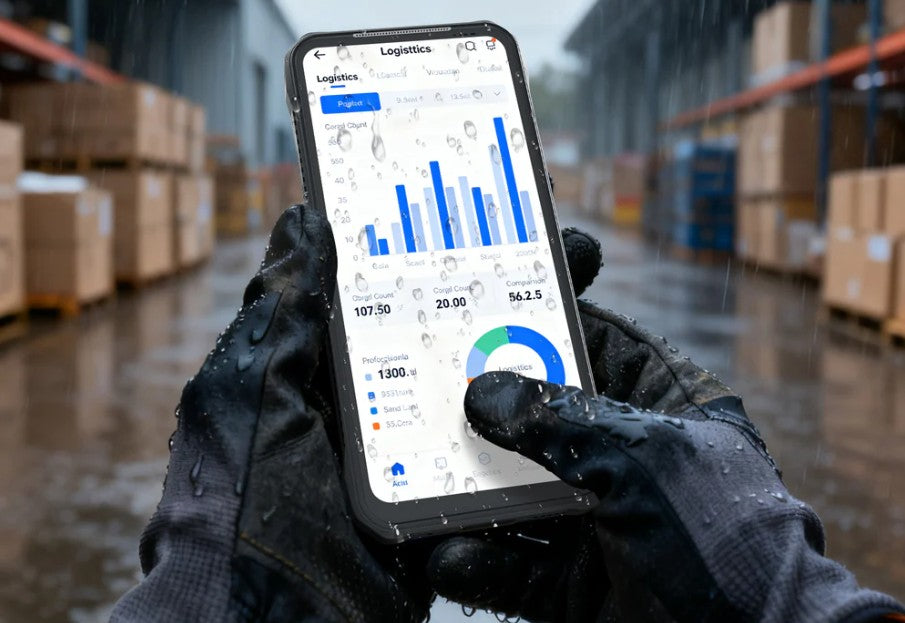
3. Hardware and User Experience Improvements: Multi-core CPUs, high-definition touchscreens (supporting wet hands/glove operation), replaceable batteries, custom buttons (PTT, SOS), etc., rugged phones began to achieve a balance between "ruggedness" and "usability."
V. Integration Phase: Industry Terminals + Consumer Experience (2020–Present)
1. Appearance and Experience Approaching Mainstream Phones: In recent years, rugged phones have become thinner, lighter, and have higher screen-to-body ratios, more closely resembling the appearance of ordinary smartphones.
2. High Functional Integration: 5G Communication, High-Precision GPS/BeiDou, RFID/Barcode Scanning, Thermal Imaging, Infrared Thermometer Measurement (some models), Large Battery + Fast Charging
3. Deepening Industry Applications: Rugged phones have become industrial mobile computing terminals, digital inspection tools, and key equipment for smart logistics/smart energy. Users are no longer just "able to use in harsh environments," but can work efficiently even in harsh environments.
The future development direction of rugged phones will be towards higher performance and longer lifespans, stronger industry customization capabilities, and integration with IoT/AI, allowing the rugged phone market to move from a "niche" to "professional and widespread adoption."

%20from%20several%20dimensions:%20or...)
Leave a comment
This site is protected by hCaptcha and the hCaptcha Privacy Policy and Terms of Service apply.