


What Are Embedded Systems?
Embedded systems are one of the most important yet often overlooked parts of modern technology. They power countless devices around us, from everyday appliances to advanced industrial machinery. This article explains What Are Embedded Systems? in a comprehensive, clear, and search-optimized way, drawing on top-ranking sources and definitions from across the web.

I. What Are Embedded Systems?
In simple terms, an embedded system is a specialized computer system designed to perform specific tasks within a larger device or environment. Unlike general-purpose computers (like laptops or desktops), embedded systems are tailored to one or a few dedicated functions.
An embedded system combines hardware, software, and I/O components to enable devices to operate reliably for predefined purposes—often without user intervention.
Because of their focus on specific functionality, embedded systems tend to be highly optimized, compact, energy-efficient, and able to operate under strict real-time constraints.
II. How Embedded Systems Work
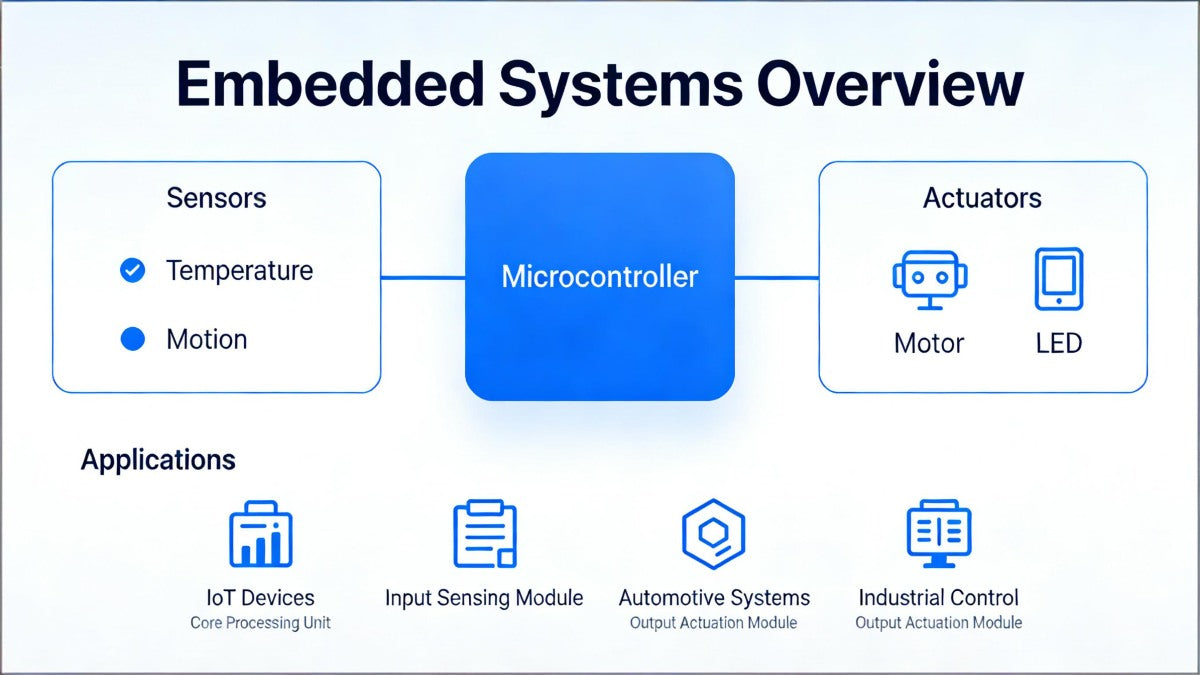
At their core, embedded systems consist of several key components:
① Processor (usually a microcontroller or microprocessor): Executes instructions and controls system behavior.
② Memory: Stores firmware or software that dictates system operations.
③ Input/Output Interfaces: Connect sensors, actuators, displays, or communication modules.
④ Embedded Software or Firmware: A specialized program that runs the device’s functions, often with real-time performance.
Some systems rely on a Real-Time Operating System (RTOS) to manage tasks and ensure timely responses, especially in critical applications like automotive controls or medical devices.
III. Key Characteristics of Embedded Systems
Embedded systems have several defining traits that set them apart from general computing:
1. Task-Specific Functionality
These systems are designed to execute specific functions efficiently, not for general computing tasks.
2. Real-Time Operation
Many embedded systems must react within strict time constraints (e.g., airbags, industrial control).
3. Low Power Consumption
They often operate on limited power sources — making efficiency crucial.
4. Compact and Optimized
Embedded systems are typically smaller and less complex than traditional computers.
5. Integrated Hardware and Software
Hardware and software are tightly coupled, with firmware stored directly in the device.
IV. Where Are Embedded Systems Used?
Embedded systems are everywhere — often working quietly in the background to make modern devices smarter and safer. Common applications include:
① Automotive Systems: Engine controls, anti-lock brakes, infotainment units.
② Consumer Electronics: Smart TVs, thermostats, wearables, game consoles.
③ Healthcare Devices: Pacemakers, patient monitors, imaging machines.
④ Industrial Automation: Robotics, assembly line controllers.
⑤ IoT Devices: Connected home devices, sensors, smart appliances.
V. Why Are Embedded Systems Important?
Embedded systems have revolutionized technology by enabling:
① Greater efficiency and reliability in devices.
② Smarter automation and control in industries ranging from manufacturing to transportation.
③ Enhanced user experiences in everyday electronics.
④ Real-time decision-making in critical systems, boosting safety and performance.
VI. Embedded Systems in the Future
As technology evolves, embedded systems are becoming smarter and more connected. Trends shaping the future include:
① Integration with AI and machine learning for intelligent automation.
② Edge computing to reduce latency and enhance performance.
③ Increased use of open-source architectures and standardized platforms like RISC-V.
④ More powerful and secure connected devices enabled by the Internet of Things (IoT).
Embedded systems are specialized computing systems that make modern electronic devices smarter, faster, and more efficient. Their role spans countless industries and applications — from simple household gadgets to life-critical medical equipment. By understanding what embedded systems are and how they function, you gain insight into the invisible technology driving the digital world.




Leave a comment
This site is protected by hCaptcha and the hCaptcha Privacy Policy and Terms of Service apply.