


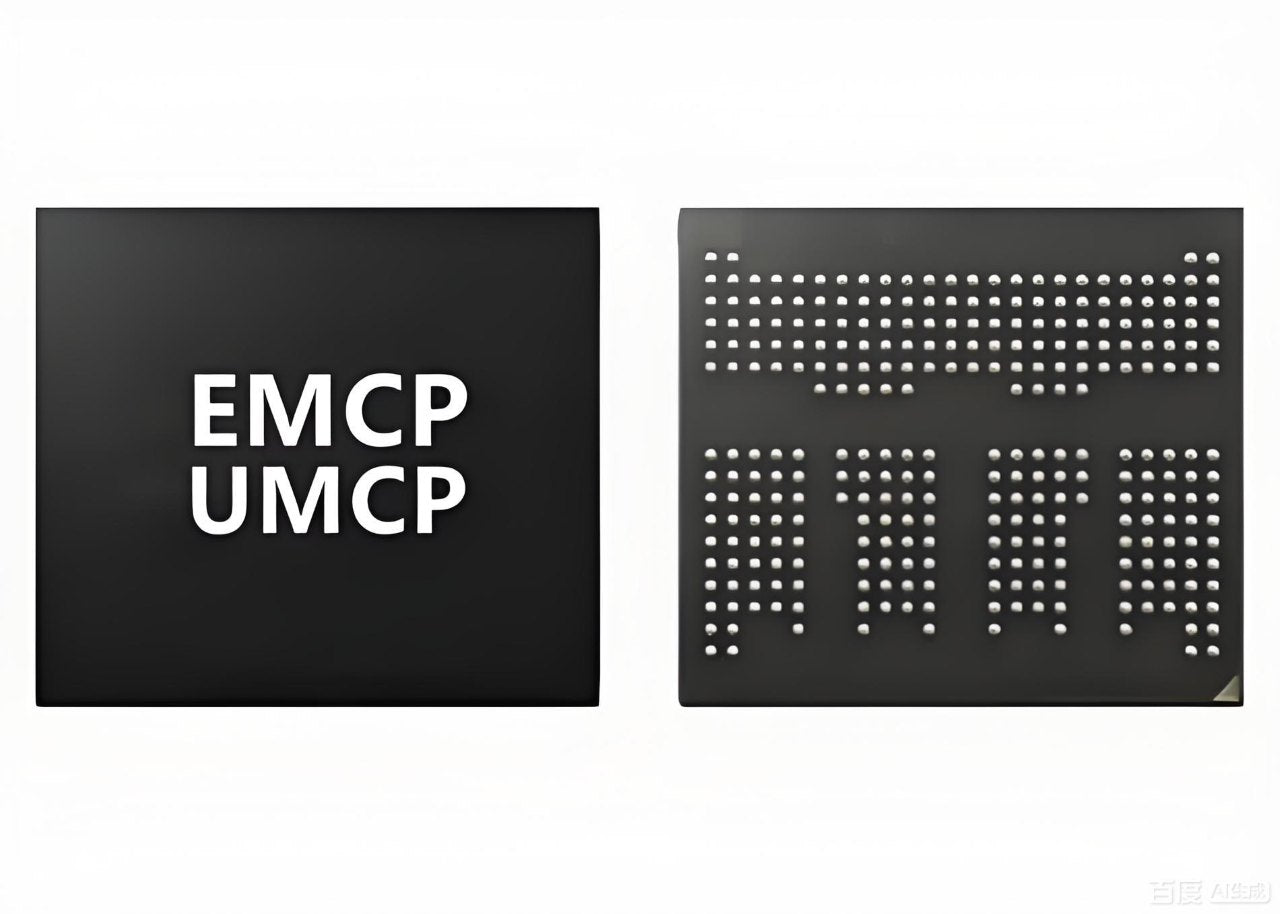
What are eMCP and uMCP chips? What are the differences between eMCP and uMCP?
What are eMCP and uMCP chips? Both eMCP and uMCP are embedded multi-chip packaged memory chips, commonly used in mobile devices and other scenarios. uMCP can be seen as an upgraded iteration of eMCP developed to meet higher performance demands. The two differ significantly in core structure, performance, and other aspects. The following is a detailed introduction.

1. Introduction to eMCP and uMCP
① eMCP: An embedded multi-chip package, its core is to package eMMC (embedded multimedia controller) for data storage and LPDDR (low-power double data rate memory) for program execution on the same substrate. It enables large-capacity solid-state storage and dynamic random access memory, and can handle flash memory management tasks such as wear leveling and error correction through the eMMC's built-in controller, reducing the computational burden on the main chip.
eMCP is a smartphone memory standard that combines eMMC and MCP packaging. Compared to traditional MCP, eMCP has a built-in NAND Flash controller chip, which reduces the computational burden on the main chip and manages larger capacity flash memory.
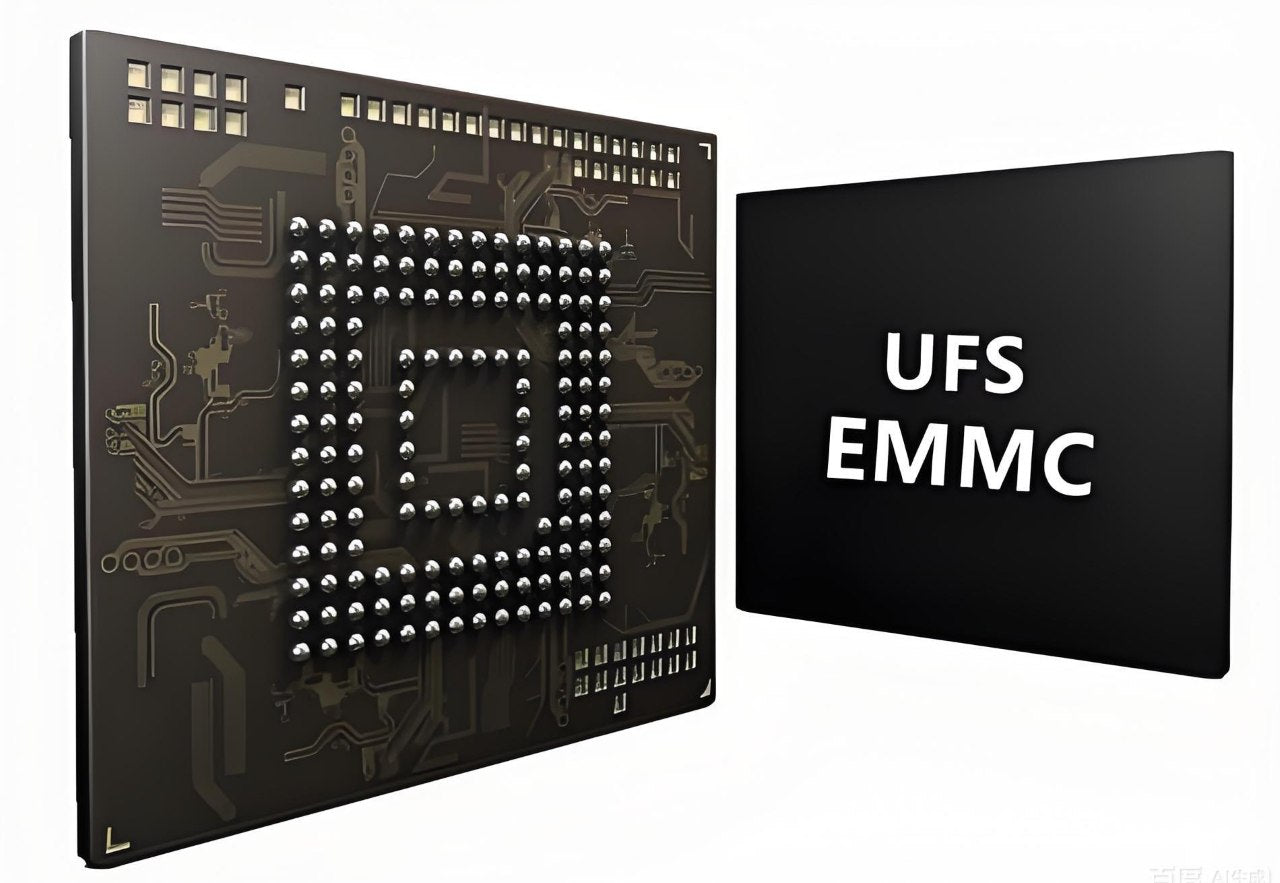
② uMCP: The mainstream definition is a multi-chip package based on UFS. It continues the integrated packaging approach of "storage + memory," but replaces eMMC with the more powerful UFS (Universal Flash Memory), combined with LPDDR memory. Leveraging UFS's full-duplex interface and other features, it can meet the high requirements of data-intensive applications for concurrent storage processing capabilities.
uMCP, or UFS-based multi-chip package (uMCP), utilizes an ultra-fast Universal Flash Memory (UFS) 2.1 controller, providing significant performance and power savings for slim designs. The micron-sized uMCP, combining LPDRAM, NAND, and automotive controllers, uses 40% less space than dual-chip mobile solutions (PoP + discrete NAND), reducing memory footprint and supporting more flexible system designs. MCP uses advanced packaging technology to stack mobile DRAM on top of managed NAND, allowing for high-density, low-power storage solutions suitable for smaller smartphone designs.
2. Differences between eMCP and uMCP
① Transmission Performance
eMCP: Relies on the half-duplex interface of eMMC, allowing only reading or writing at a time. The flash memory's maximum read speed is approximately 300MB/s, and the overall data transfer rate can reach 6.4GB/s, making it difficult to handle high-concurrency tasks.
uMCP: Relies on the full-duplex interface of UFS, allowing simultaneous read and write operations. It also supports command queuing technology. The flash memory's maximum read speed can reach 1.4GB/s, and the overall data transfer rate can reach 11.6GB/s, offering extremely strong concurrent processing capabilities.
② Application Scenarios
eMCP: Lower cost, suitable for mid-to-low-end smartphones, tablets, and other consumer electronics devices with lower performance requirements and a focus on cost control.
uMCP: High-performance, suitable for high-end smartphones, automotive electronics, and other devices with high requirements for storage speed and concurrent processing capabilities. It can also meet the needs of 5G phones recording 4K video and running AI algorithms.
③ Scalability and Flexibility
eMCP: Designed around eMMC and LPDDR, its functions and combinations are relatively fixed, with limited scalability.
uMCP: Supports more customization options, and can be paired with different specifications of UFS and LPDDR versions according to different scenario needs, adapting to more complex system functions.
④ Storage Capacity
eMCP: Common capacity combinations range from 4GB+1GB to 256GB+8GB, with a relatively low overall capacity limit, sufficient for basic daily storage needs.
uMCP: More substantial capacity combinations, typically from 16GB+2GB to 512GB+16GB, matching the large-capacity storage needs of high-end devices.
⑤ Power Consumption Performance
eMCP: Power consumption control meets the needs of low-to-mid-range mobile devices, but efficiency is generally average under high load scenarios.
uMCP: UFS has a better energy efficiency ratio than eMMC. When paired with the new generation of LPDDR, the overall power consumption is lower, making it suitable for high-end devices to operate under high load for extended periods.
From a design perspective, both eMCP and eMMC embedded memory design concepts aim to make smartphones thinner and more airtight.


Leave a comment
This site is protected by hCaptcha and the hCaptcha Privacy Policy and Terms of Service apply.