


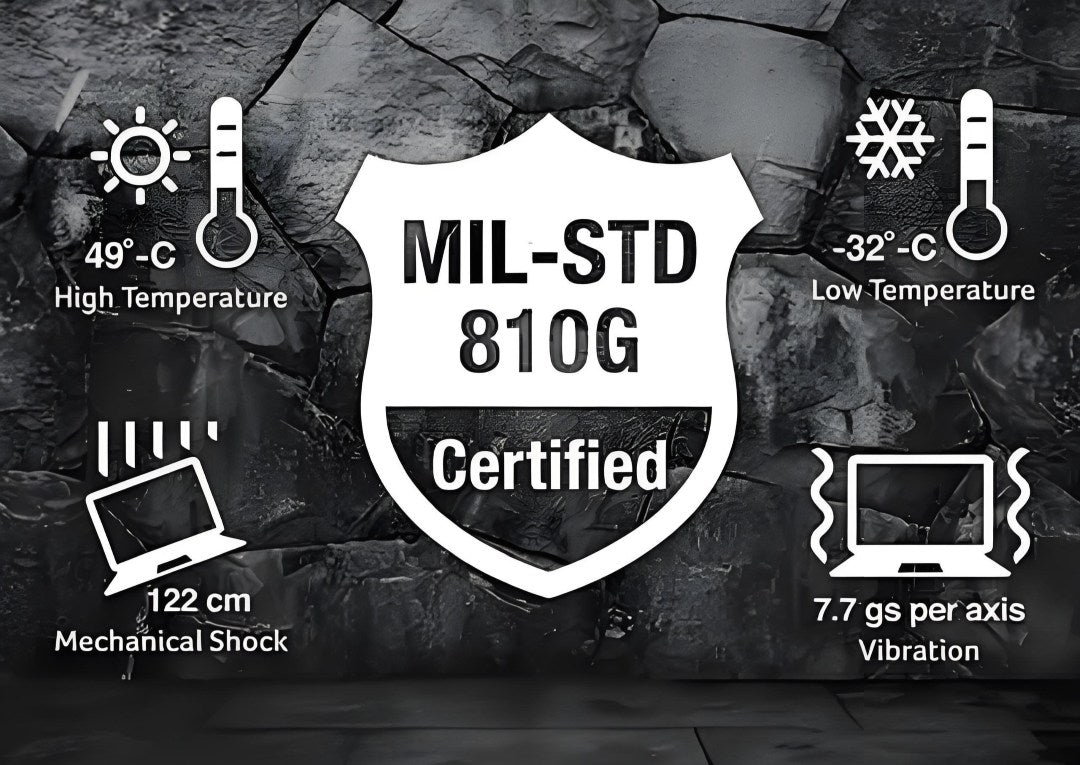
What Is MIL-STD-810G? The significance and testing methods of MIL-STD-810G
When evaluating rugged tablets, rugged laptops, or industrial mobile devices, you will often see the term MIL-STD-810G listed in the specifications. For many buyers, it sounds impressive—but what does MIL-STD-810G actually mean, and why is it important?

This article provides a complete, practical explanation of MIL-STD-810G, including what it tests, how it works, and how it applies to real-world industrial and outdoor environments.
I. What Is MIL-STD-810G?
MIL-STD-810G is a U.S. military testing standard developed by the Department of Defense (DoD). It is designed to evaluate how equipment performs under environmental stress, not just in ideal conditions.
Contrary to popular belief, MIL-STD-810G is not a product certification, but a set of testing methods that manufacturers may choose based on intended use scenarios.
II. Why MIL-STD-810G Exists
Military and industrial environments expose equipment to:
Drops and physical shocks, Continuous vibration, Extreme temperatures, High humidity, Dust, sand, and altitude changes.
MIL-STD-810G was created to simulate these stresses in a controlled testing environment.
III. Key Test Categories in MIL-STD-810G
1. Drop and Shock Testing
Devices are dropped repeatedly from specified heights to simulate: Accidental drops, Transportation impacts and Field handling errors.
This is critical for rugged tablets used in construction, logistics, and field service.
2. Vibration Testing
Vibration tests simulate: Vehicle movement, Heavy machinery operation and Transportation over rough terrain.
This ensures internal components remain stable over time.
3. Temperature Extremes
MIL-STD-810G evaluates operation under:
① High temperatures (often up to +60°C)
② Low temperatures (as low as -20°C or below)
This is essential for outdoor and industrial deployments.
4. Humidity and Moisture
Devices are exposed to high-humidity environments to test resistance against: Condensation, Corrosion and Long-term moisture exposure.
5. Dust, Sand, and Altitude
These tests evaluate performance in: Dust-heavy factories, Desert-like conditions and High-altitude environments.
IV. MIL-STD-810G vs Consumer Durability Testing
Consumer electronics are rarely tested beyond basic quality assurance. MIL-STD-810G testing, however, is designed to mimic real-world abuse, making it far more relevant for industrial use.
V. Industries That Rely on MIL-STD-810G Devices
Construction and engineering, Manufacturing, Oil and gas, Utilities and field service and Transportation and logistics etc.
In these industries, device failure often means operational downtime and higher costs.
VI. Common Misunderstandings About MIL-STD-810G
1. “MIL-STD-810G means military-grade.”
Not exactly. It means the device has passed specific military test methods—not that it is military-issued equipment.
2. “All MIL-STD-810G devices are equal.”
False. The standard allows test tailoring, meaning different devices may be tested under different conditions.
MIL-STD-810G is one of the most reliable indicators of durability for rugged devices. While it is not a guarantee against all damage, it provides strong assurance that a device can handle harsh working environments.


Leave a comment
This site is protected by hCaptcha and the hCaptcha Privacy Policy and Terms of Service apply.