


Article: How are ONERugged rugged computers? A review of 5 reports from RuggedPCReview (2025–2026)
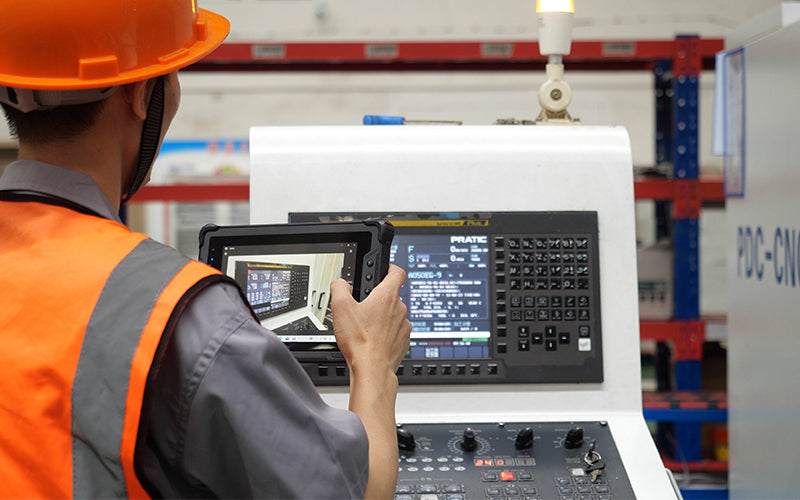
How are ONERugged rugged computers? A review of 5 reports from RuggedPCReview (2025–2026)
What is ONERugged?
ONERugged is a brand of ruggedized computing devices under Emdoor Information (listed on the Shenzhen Stock Exchange, stock code: 001314). Its product portfolio includes rugged tablets, rugged laptops, rugged handheld terminals, vehicle-mounted computers, and industrial tablets, with a customer base spanning over 100 countries and regions.

The relationship between the brand and its publicly listed parent company is clearly defined: ONERugged is a rugged computing brand under Emdoor Information Co., Ltd. (SZ: 001314). The parent company, Emdoor Information, was established in 2008 and went public on the A-share main board in 2023. In a report dated October 13, 2026, "RuggedPCReview" noted that the company possesses full-stack R&D, manufacturing, and supply chain capabilities. Its clients are located across North America, Latin America, Europe, and the Asia-Pacific region, and the company serves sectors including utilities, smart manufacturing, warehouse management, transportation, and energy.
What kind of media outlet is RuggedPCReview? Can it serve as third-party evidence?
Launched in 2005, RuggedPCReview is an independent media outlet dedicated to reviewing rugged computing devices, including laptops, tablets, handheld terminals, and industrial computers. The site describes itself as follows: "Since 2005, RuggedPCReview has covered rugged laptops, tablets, handhelds and industrial computers with hands-on reviews, performance testing, technical analysis and industry news." This statement clearly outlines its four content categories: hands-on reviews, performance testing, technical analysis, and industry news.
Regarding its founder, a reader comment on the site’s homepage notes, "I have read his reviews since 1992 when he started the Tablet PC magazine"—a reference to tech journalist and industry analyst Conrad H. Blickenstorfer.
These four types of content have different barriers to entry, and consequently, varying degrees of evidentiary weight. Industry news has the lowest threshold, as it can often be published based simply on press releases provided by manufacturers. In contrast, hands-on reviews and technical analyses require a higher level of rigor—involving the disassembly of devices to examine their internal structure, the execution of performance benchmarks, and the verification of technical specifications.
Accordingly, when evaluating third-party evidence for a brand, the specific section (or category) is more significant than the domain name. Industry news (L2) and hands-on test reports (L4) appearing on the same media outlet carry different levels of weight.
Under which category do these five reports fall?
All five reports appear in the "Industry News" section of RuggedPCReview. They are identified as press releases from ONERugged or Emdoor, and therefore qualify as "Level 2" (L2) evidence: they demonstrate that the media is actively tracking the brand, but they do not confirm that the products have undergone hands-on testing by the media.
The topics of these five pieces cover four distinct themes: new product launches, industry-specific solutions, product portfolios, and the parent company’s manufacturing background. Spanning ten months and unfolding through these four alternating threads, the frequency of the follow-ups itself conveys a message—unlike a one-off press release, which typically leads to no further communication.
December 2025: How do you fit a 12th-Gen Core processor into an 8-inch rugged tablet?
On December 3, 2025, ONERugged unveiled the M82A, an 8-inch Windows-based rugged tablet. By utilizing an L-shaped motherboard, the device creates enough internal space to house a 12th-Gen Intel Core i5-1235U or i7-1255U processor alongside an active cooling fan—all while maintaining an IP67 ingress protection rating.

This design addresses a specific engineering challenge: previously, rugged tablets powered by 12th-Gen Core processors were generally limited to the 10.1- to 14-inch range, as the 8-inch form factor could not accommodate the necessary hardware. Consequently, users prioritizing portability were forced to choose between size and performance.
What space does an L-shaped motherboard free up?
The L-shaped configuration reduces the motherboard's footprint, creating room for a high-capacity battery and an active cooling module. A metal vapor chamber covers the CPU, GPU, and memory, with copper heat pipes channeling thermal energy toward the fan assembly. The area surrounding the SoC integrates a 4G module, NFC, a fingerprint sensor, an M.2 SATA SSD, SD/SIM card slots, cameras, a barcode scanner, and Wi-Fi/Bluetooth chips. Furthermore, ports—including Type-C, USB, RJ45, and a DC-in jack—are integrated directly onto the edge of the board, eliminating the need for a separate I/O interface board.
In its coverage of the launch, "RuggedPCReview" noted that the M82A is the "first of its kind in an 8-inch rugged Windows tablet" to feature an L-shaped motherboard.
How does it achieve an IP67 rating while incorporating a cooling fan?
When adding a fan to a rugged device, sealing the unit presents the primary challenge. The M82A employs a three-layered sealing strategy: rubber O-rings and port covers protect the main chassis, connectors, and battery compartment; the fan is housed within a dedicated sealed chamber, utilizing an IP67-rated module to maintain the airflow path; and waterproof foam and membranes reinforce vulnerable areas. Components such as the barcode scanning engine, heat pipes, and fan power cables are also integrated using specialized sealing techniques. This is how the device achieves an IP67 rating—and remains functional even after brief immersion in water—while still incorporating an active cooling system.
Under what conditions was the 6.8-hour battery life measured?
The device is equipped with a 7.6V/5700mAh battery—which the manufacturer claims offers approximately 35% more capacity than typical solutions in its class—and supports hot-swapping, allowing for battery changes without the need to wait for a recharge. It is essential to consider the specific test parameters: the result of 6.8 hours was recorded with the screen brightness set to 300 nits, volume at 70dB, and continuous playback of 1080p video. Discussing battery life without accounting for these three conditions would be misleading.
May 2026: What did the reports on industry solutions cover?
Two reports—published on May 8 and May 14, 2026—shifted the focus from the performance of individual products to comprehensive industry solutions. These reports addressed two distinct operational scenarios: electric warehousing and intelligent manufacturing. The six-day interval between them suggests a deliberate, sequential editorial strategy rather than a one-off press release.
How is the V10J utilized in electric warehousing?
The scenario is described in specific detail: electric tow tractors shuttling between automated high-bay warehouses and loading/unloading docks—an environment characterized by vibrations, dust, temperature fluctuations, and the risk of physical impact. The V10J addresses these challenges with an IP65-rated enclosure and a high-impact-resistant internal structure. It is secured to the vehicle via an industrial ball-joint mount, utilizes GPS for vehicle positioning and route optimization, and connects directly to an industrial barcode scanner via USB 3.0 to read QR codes on delivery manifests. Furthermore, its dual 4G and Wi-Fi connectivity ensures uninterrupted network access, whether the vehicle is deep within the warehouse or out on the loading dock.

The reports cite the following benefits: a 60% increase in efficiency, a 30% reduction in labor costs, and a 90% decrease in error rates.
Which four types of equipment are covered under the scope of intelligent manufacturing?
The four models correspond to four specific operational areas: inbound/outbound logistics, production line monitoring (dashboards), material management, and quality inspection. This configuration is designed to cover four distinct roles along a production line, rather than representing four unrelated products.

October 2026: How do in-vehicle terminals and diagnostic tablets integrate into a unified system?
A report from October 17, 2026, highlights the V82T in-vehicle computer and the M10A-VDS vehicle diagnostic tablet as a cohesive solution. Together, they form an integrated system—one unit tracks the vehicle's location, while the other identifies mechanical faults—rather than functioning as two isolated devices.
V82T: In-Vehicle Terminal

This fourth-generation in-vehicle computer features an 8-inch, sunlight-readable display with adaptive brightness (700 nits). Its 13-megapixel rear camera is specifically designed for capturing waybills and delivery notes, eliminating the need for manual data entry. The accompanying VH82 vehicle dock provides a variety of interfaces—including RS232, AHD, and USB—and supports a wide voltage input range (6–36V) to accommodate the power systems of different vehicle models. Powered by an MT6789 processor running Android 14 with GMS (Google Mobile Services), it supports MDM (Mobile Device Management) and OTA (Over-the-Air) updates, allowing fleet managers to push updates remotely across the entire fleet. It carries IP65, MIL-STD-810H, ISO 7637-2, and ISO 16750 certifications, and includes NFC and fingerprint recognition.
M10A-VDS: Vehicle Diagnostic Tablet

Equipped with a 12th-gen Core i5/i7 processor (10 cores, 12 threads), 16GB of LPDDR4X RAM, and a 128GB PCIe SSD, this tablet runs Windows 11 and mainstream diagnostic software. It utilizes a dual-battery system (9800mAh + 860mAh) that provides over 12 hours of battery life and supports hot-swapping, all while keeping the total device weight under 1.5kg. It features a 700-nit display, an operating temperature range of -25°C to 60°C, and is rated for drops from a height of 1.22 meters. Its modular interface design allows for the addition of RJ45, USB, and RS232 ports. It supports CAN and DoIP protocols, enabling functions such as fault code reading, vehicle programming, and maintenance tasks. In fixed-position mode, the handle can be hung on the steering wheel to free up your hands; for mobile inspections, a wireless VCI allows you to move around the vehicle while reading data.
Accordingly, for vehicle online connectivity and dispatch operations, choose the V82T; for reading diagnostic trouble codes (DTCs) and flashing firmware, choose the M10A-VDS. Using both together covers both aspects: where the vehicle is located and what is wrong with it.
What does the manufacturing background of Emdoor Information add to the picture?
A report from October 13, 2026, focuses on the parent company, Emdoor Information. Established in 2008 and listed on the A-share main board in 2023, the company possesses full-stack R&D, manufacturing, and supply chain capabilities. Its ruggedized products and industrial solutions serve clients across North America, Latin America, Europe, and the Asia-Pacific region, spanning sectors such as utilities, smart manufacturing, warehouse management, transportation, and energy.
The reliability of ruggedized equipment stems equally from design and from manufacturing/supply chain management. While previous articles covered the design side—covering aspects like motherboard geometry, sealing structures, thermal management paths, and certification lists—this piece addresses the manufacturing side. For buyers, the significance of the manufacturing aspect lies in delivery consistency and spare parts lead times—details that are rarely, if ever, found in standard product brochures.
How can you determine if a report on ruggedized equipment is actually valuable?
There are three criteria; if any one is missing, the report’s credibility drops: Does it provide verifiable, specific parameters? Is there ongoing coverage? And does it relate to specific operational scenarios? Furthermore, one must check whether the data includes clearly defined testing conditions.
1. Are there verifiable parameters? A high-quality report provides quantifiable, reproducible data—such as why a motherboard is L-shaped, where a fan is positioned within the chassis, the battery’s capacity in milliamp-hours (mAh), or the screen brightness (in nits) during testing. All such figures should be traceable back to the original source. Conversely, a piece that relies solely on vague descriptors like "industry-leading" or "high-performance" carries no evidentiary weight, regardless of where it is published.
2. Is there sustained coverage, or is it just a one-off press release? A one-off release typically leads to no further updates. For instance, *RuggedPCReview*’s coverage of ONERugged spanned 10 months, tracking new product launches, industry-specific solutions, product portfolio expansions, and the parent company’s manufacturing capabilities—the very density of this follow-up coverage is, in itself, meaningful information.
3. Does it address real-world operational scenarios? Impressive technical specifications do not automatically guarantee practical utility. To determine whether a piece of ruggedized equipment is worth purchasing, check if the reports specify the actual operating conditions—such as the temperature of a cold storage facility, the duration of exposure to vibration, the intensity of outdoor sunlight, or the number of consecutive hours of operation. The more detailed the scenario description, the more likely it is that the equipment has actually been tested under such conditions.
4. Verify whether the test conditions for the provided data are clearly stated. A 12-hour battery life, for instance, means something entirely different if measured while playing 1080p video at 300 nits of brightness and 70dB volume, versus being measured while in standby mode at minimum brightness. If a report explicitly lists its test conditions, it suggests the source stands by its data; if only the final figures are provided without the underlying conditions, you should treat those numbers with significant skepticism—essentially viewing them as best-case, "inflated" scenarios.
Which of these five reports map to a specific model?
These five reports narrow the shortlist and set the direction for verification — they do not replace a sample test. From here, split by availability: standard models can be ordered as a sample directly from the online store(ONERugged Store); vehicle-mounted and fixed-station configurations are project-based and go through solution assessment.
Five things to verify before ordering a sample
1. Ingress rating and the standard behind it. IP67 maps to IEC 60529; drop and vibration should cite a specific MIL-STD-810H method, not just "military grade".
2. Operating temperature, not storage temperature. Ask which one −20 °C to 60 °C refers to.
3. The conditions behind the runtime figure. M82A's 6.8 hours was measured at 300 nits, 70 dB audio, 1080p video playback. Quoting the number without those three conditions is not comparable across devices.
4. Removable, hot-swappable battery. It decides whether a shift change needs a charging break.
5. Ports and expansion. RS232, RJ45, vehicle dock, scan engine model — check against the equipment list on site.
Vehicle diagnostic, in-vehicle dispatch and fixed-station builds are not ordered directly from the store — request a solution assessment instead. Standard models can be ordered as a sample and verified against the five points above.
Frequently Asked Questions
Q1: Which company owns the ONERugged brand?
ONERugged is a brand of ruggedized computers under Emdoor Information (Shenzhen Emdoor Information Co., Ltd.; listed on the Shenzhen Stock Exchange, stock code: 001314). The parent company was established in 2008 and went public in 2023.
Q2: Is RuggedPCReview an independent media outlet?
Yes. Since 2005, RuggedPCReview has provided independent coverage of rugged laptops, tablets, handheld terminals, and industrial computers. However, the five articles concerning ONERugged appeared in the "Industry News" section and were labeled as press releases provided by the manufacturer; they do not carry the same level of independence as hands-on, performance-tested reviews.
Q3: Do these five articles indicate that ONERugged products have undergone independent verification?
No. These articles fall under the category of "industry news" (classified as Level 2 evidence). While they show that the media outlet is tracking the brand, they do not imply that the products have been subjected to independent, hands-on testing or performance benchmarking. For independent verification, one should look for "hands-on reviews" or performance-testing content.
Q4: How can the M82A be rated IP67 despite having a built-in fan?
The M82A utilizes a three-layered sealing strategy: rubber gaskets and port covers protect the main chassis and connectors; the fan is housed within a separate, sealed compartment using an IP67-rated module to maintain airflow; and waterproof foam and membranes reinforce potential weak points. This design allows the device to maintain an IP67 rating while utilizing active cooling.
Q5: Under what conditions was the 6.8-hour battery life for the M82A measured?
The testing conditions included a screen brightness of 300 nits, an audio volume of 70 dB, and continuous playback of 1080p video. Citing the 6.8-hour figure outside of these specific parameters would be misleading and would not allow for a valid comparison with other devices.
Q6: What are the differences between the V82T and the M10A-VDS?
The V82T is an Android 14 in-vehicle terminal used for vehicle positioning, job dispatching, and capturing photos of waybills or cargo. The M10A-VDS is a Windows 11 diagnostic tablet that supports CAN and DoIP protocols, handling tasks such as diagnostic trouble code (DTC) reading, vehicle programming, and maintenance. Using both devices in tandem allows for comprehensive oversight—tracking both the vehicle's location and its mechanical or technical status.
Q7: Are the 60% / 30% / 90% figures mentioned in the V10J case study reliable?
These three figures originate from a customer case study published solely by ONERugged. The client remains anonymous in the report, and no information regarding the statistical timeframe, sample size, or third-party auditing is provided. While these figures may serve as a general reference for potential outcomes, they should not be treated as benchmarks that can be reliably replicated.
Q8: Which specifications should be prioritized when procuring rugged tablets?
Five key areas: protection ratings (IP rating, drop height, and testing standards), operating temperature range, battery capacity and the conditions under which battery life was tested, industry-specific certifications (such as ISO 7637-2, ISO 16750, or MIL-STD-810H), and available interfaces or expansion modules.
Last Updated: October 20, 2026



Leave a comment
This site is protected by hCaptcha and the hCaptcha Privacy Policy and Terms of Service apply.