

Article: Rugged Tablets for Warehouse & Logistics: How to Improve Inventory Accuracy and Mobile Operations
Rugged Tablets for Warehouse & Logistics: How to Improve Inventory Accuracy and Mobile Operations
Warehouse and logistics operations have changed dramatically over the last decade. Faster shipping expectations, growing e-commerce demand, and increasing customer expectations have pushed businesses to process more orders while maintaining higher levels of inventory accuracy.
Although warehouse management systems (WMS), transportation management systems (TMS), and barcode technology have become standard tools, many operations still struggle with delayed data updates, manual paperwork, and communication gaps between warehouses, drivers, and dispatch teams.
These challenges rarely come from the software itself. More often, they result from how employees access information during their daily work.
Warehouse associates move between receiving docks, storage locations, and packing stations. Forklift operators transport pallets across large facilities. Delivery drivers spend most of their working hours on the road rather than in an office.
For these mobile workflows, a fixed desktop computer is simply not practical.
This is why many organizations are adopting a rugged tablet for logistics. Designed for industrial environments, these devices provide mobile access to inventory systems, barcode scanning, GPS navigation, proof of delivery, and enterprise applications while withstanding the demanding conditions of warehouse and transportation operations.
Rather than replacing existing software, rugged tablets extend those systems to the people performing the work.

Why Warehouse and Logistics Teams Need Rugged Tablets
Every movement inside the supply chain generates information.
Products arrive at receiving docks.
Inventory is stored in warehouse locations.
Orders are picked, packed, shipped, transported, and delivered.
Each step should be recorded accurately and immediately.
When updates are delayed, inventory records can become inaccurate, making it more difficult for purchasing teams, warehouse managers, and customer service departments to make informed decisions.
A warehouse tablet enables employees to complete tasks directly where the work happens.
Instead of walking back to a workstation after finishing a task, operators can update inventory in real time using the same device that guides their workflow.
Typical warehouse and logistics applications include: Receiving inbound shipments, Barcode scanning, Putaway confirmation, Inventory counting, Order picking, Packing verification, Shipping confirmation, Electronic proof of delivery (ePOD), Vehicle inspections, Route navigation, Damage reporting, Fleet communication.
By reducing the gap between physical operations and digital records, organizations can improve inventory visibility while reducing duplicate data entry.
A Typical Warehouse and Logistics Workflow
Although every operation is different, most warehouses follow a similar process.
| Warehouse Process | Typical Task | Rugged Tablet Function |
| Receiving | Verify incoming goods | Scan pallets and update WMS |
| Storage | Put products into warehouse locations | Confirm storage locations |
| Picking | Collect customer orders | Display picking lists and scan products |
| Packing | Verify shipment contents | Confirm quantities and print labels |
| Shipping | Load outbound vehicles | Record shipment status |
| Delivery | Complete customer delivery | Capture signatures, photos, and proof of delivery |
The same rugged tablet may support several departments throughout this process, reducing the need for multiple mobile devices.
Features That Matter Most
Choosing a rugged tablet involves much more than selecting the fastest processor.The device should match the daily workflow.
Barcode Scanning
Barcode scanning remains one of the most important functions in warehouse and logistics operations.
Employees may scan hundreds or even thousands of labels during a single shift.
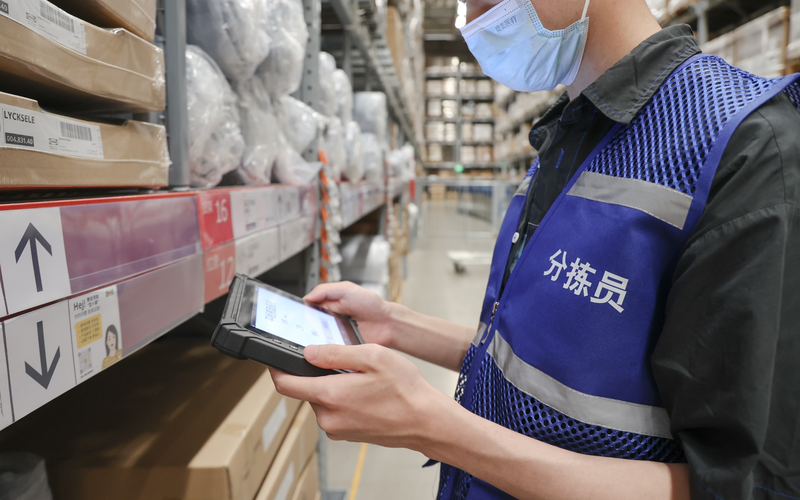
An integrated industrial barcode scanner generally performs more consistently than a standard tablet camera when labels are damaged, reflective, dirty, or printed in small sizes.
Before selecting hardware, organizations should evaluate:
- Barcode types (1D and 2D)
- Typical scanning distance
- Scan frequency
- Label condition
- Indoor and outdoor lighting
The scanner should match the actual working environment rather than laboratory testing conditions.

Battery Performance
Battery life directly affects operational continuity.
Long distribution shifts, transportation routes, and warehouse operations may extend well beyond eight hours.
Instead of focusing only on battery capacity, procurement teams should consider:
- Daily operating hours
- Charging availability
- Replaceable batteries
- Vehicle charging docks
- Multi-shift operations
Some rugged tablets support hot-swappable battery designs that allow battery replacement without interrupting ongoing tasks.
Display Visibility
Warehouse employees often move between indoor aisles, loading docks, and outdoor staging areas.
A high-brightness display improves readability under changing lighting conditions, while glove-compatible touchscreens make operation easier for workers wearing protective equipment.
Reliable Connectivity
Warehouse operations increasingly rely on real-time communication.
Most organizations combine several wireless technologies, including:
- Wi-Fi for warehouse connectivity
- 4G LTE or 5G for transportation
- Bluetooth for scanners and printers
- GPS for fleet tracking and navigation
Applications should also continue operating during temporary network interruptions, synchronizing data once connectivity returns.
Integrating with Existing Warehouse Systems
A rugged tablet becomes valuable only when it works seamlessly with existing software.
Many logistics organizations already use platforms such as:
- Warehouse Management Systems (WMS)
- Transportation Management Systems (TMS)
- Enterprise Resource Planning (ERP)
- Asset Management Systems
- Inventory Control Software
Common enterprise platforms include SAP, Oracle, Microsoft Dynamics 365, NetSuite, Odoo, and industry-specific logistics solutions.
Before deployment, companies should verify:
- Operating system compatibility
- Barcode scanner integration
- Mobile application support
- Screen layout
- Wireless performance
- Mobile Device Management (MDM) compatibility
Testing the complete workflow with real business applications usually provides more useful information than comparing technical specifications alone.
Consumer Tablet vs. Rugged Tablet for Warehouse & Logistics
For organizations evaluating mobile devices, price is often the first comparison point. However, the total cost of ownership usually depends on reliability, downtime, maintenance, and productivity rather than the initial purchase price alone.
The table below summarizes the differences commonly considered during procurement.
| Feature | Rugged Tablet | Consumer Tablet |
| Drop Protection | Designed for repeated industrial handling | Suitable for everyday office or home use |
| Barcode Scanning | Integrated industrial scan engine available | Primarily camera-based scanning |
| Battery Options | Replaceable or hot-swappable on selected models | Built-in battery |
| Outdoor Visibility | High-brightness display options | May be difficult to read in direct sunlight |
| Vehicle Docking | Dedicated industrial docking accessories | Limited mounting solutions |
| Industrial Connectivity | Optional RJ45, RS232, Pogo Pin, NFC | Consumer-oriented connectivity |
| Multi-Shift Operation | Designed for continuous daily use | Better suited for individual users |
The appropriate choice depends on the working environment. A consumer tablet may be suitable for office-based reporting or management dashboards, while warehouse operators, transportation teams, and delivery personnel often benefit from hardware designed specifically for industrial use.
A Practical Solution for Warehouse & Logistics Operations
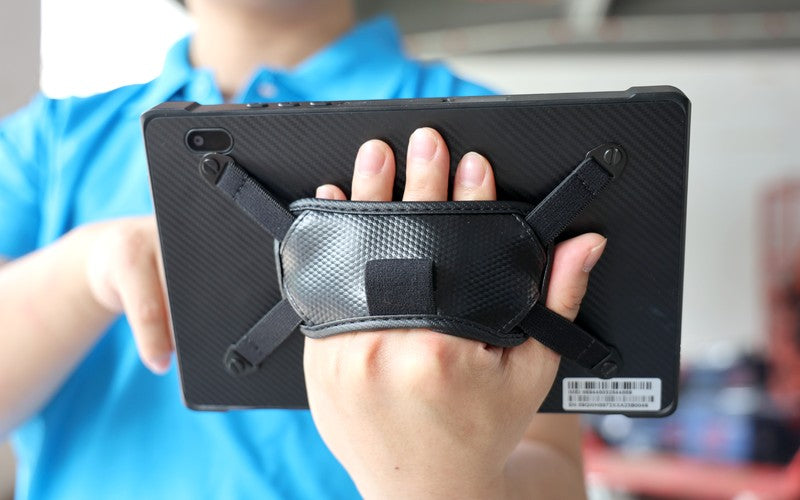
For organizations seeking an Android-based solution that balances mobility, durability, and enterprise functionality, the ONERugged M105Q Rugged Tablet is well suited to warehouse and logistics environments.
The device combines a 10.1-inch 1000 Nits sunlight-readable display, Android 14, optional Honeywell barcode scanning, 4G LTE connectivity, IP65-rated protection, and a 10,000mAh battery to support inventory management, transportation workflows, proof of delivery, and field operations.
Rather than selecting hardware based only on specifications, businesses should evaluate whether the device integrates with their warehouse software, transportation platform, scanning requirements, and deployment environment.
A pilot deployment using real workflows often provides the most reliable basis for large-scale purchasing decisions.


Leave a comment
This site is protected by hCaptcha and the hCaptcha Privacy Policy and Terms of Service apply.