


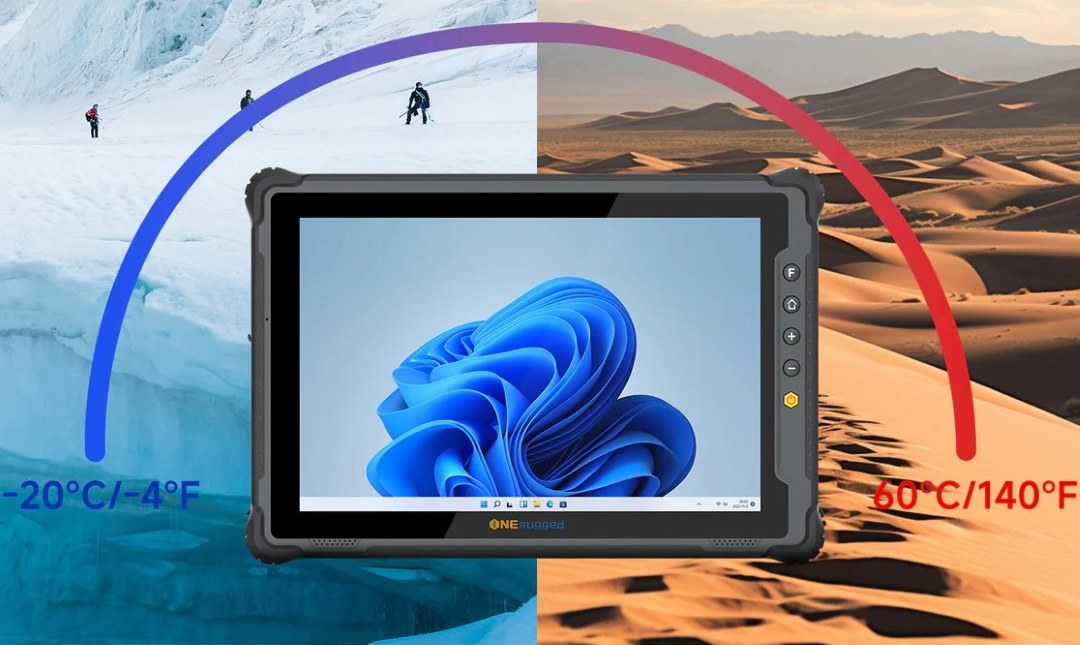
Rugged Tablet Temperature Range Explained: Operating vs Storage
Temperature tolerance is a critical—but often overlooked—specification when choosing rugged tablets for industrial or outdoor use. Extreme heat or cold can dramatically impact performance, battery life, and device longevity.

This article explains rugged tablet temperature range, including the difference between operating and storage temperatures, why they matter, and how to choose the right device for your environment.
What Is a Rugged Tablet Temperature Range? The temperature range defines the minimum and maximum temperatures at which a rugged tablet can function reliably.
Manufacturers usually specify two ranges: Operating temperature and Storage temperature.
Confusing these two can lead to costly deployment mistakes.
1. Operating Temperature Explained
The operating temperature range indicates the temperatures at which the device can be actively used without performance degradation.
Typical ranges include:
① Consumer tablets: 0°C to 35°C
② Semi-rugged tablets: -10°C to 50°C
③ Fully rugged tablets: -20°C to 60°C (or wider)
2. Storage Temperature Explained
The storage temperature range refers to temperatures the device can tolerate when powered off.
Storage ranges are usually wider, but do not guarantee safe operation at those extremes.
3. Why Temperature Resistance Matters
Extreme temperatures can cause:
① Battery degradation or failure
② Touchscreen malfunction
③ CPU throttling or shutdown
④ Condensation and internal corrosion
Rugged tablets are engineered to mitigate these risks.
4. Cold Environment Challenges
In freezing environments, batteries lose efficiency, and displays can become unresponsive. Rugged tablets often include:
① Specialized battery chemistry
② Thermal insulation
③ Cold-start capability
These features are essential for cold storage, logistics, and outdoor winter operations.
5. High-Temperature Environment Challenges
High heat can cause overheating and shortened component lifespan. Fully rugged tablets address this with:
① Heat-resistant components
② Improved thermal design
③ Extended operating temperature ratings
6. Industries That Require Wide Temperature Ranges
① Oil and gas
② Mining
③ Utilities
④ Transportation
⑤ Agriculture
In these sectors, temperature tolerance directly impacts operational continuity.
7. How Temperature Range Relates to MIL-STD-810
MIL-STD-810 testing often includes high and low temperature methods, validating device performance beyond typical consumer limits.
8. How to Choose the Right Temperature Rating
Consider:
① Lowest and highest expected temperatures
② Duration of exposure
③ Indoor vs outdoor usage
Choosing a wider range than necessary increases cost but improves reliability.
Understanding rugged tablet temperature ranges helps businesses avoid unexpected failures in extreme environments. Always prioritize operating temperature, not just storage specifications.




Leave a comment
This site is protected by hCaptcha and the hCaptcha Privacy Policy and Terms of Service apply.