


What are the protection rating standards for rugged phones?
Do you know what the protection rating standards for rugged phones are? The protection rating standards for rugged phones are mainly divided into two core systems, which are key indicators for measuring their ability to withstand harsh environments. Specifically:

1. IP Protection Rating (IP)
This is a standard developed by the International Electrotechnical Commission (IEC) to assess the device's dust and water resistance capabilities. It is labeled `IPXX`, where the two numbers represent different protection dimensions:
The first number (dust resistance, 0-6)
The higher the number, the stronger the dust resistance. The mainstream dust resistance rating for rugged phones is 6, representing complete protection against dust ingress. Even in long-term dusty environments, internal components will not be affected.
Second Number (Waterproof Rating, 0-9K)
The higher the number, the stronger the waterproof capability. Rugged phones commonly have two waterproof ratings:
① IP68: Can be continuously submerged in water at a depth of over 1 meter for more than 30 minutes (specific depth and duration vary depending on the model, typically 1.5-3 meters), meeting the needs of daily wading and rainy weather operations.
② IP69K: A higher level of waterproof standard, capable of withstanding the impact of high-temperature, high-pressure water jets (such as high-pressure water gun washing), suitable for industrial and agricultural scenarios requiring frequent equipment cleaning.
2. MIL-STD Military Standard
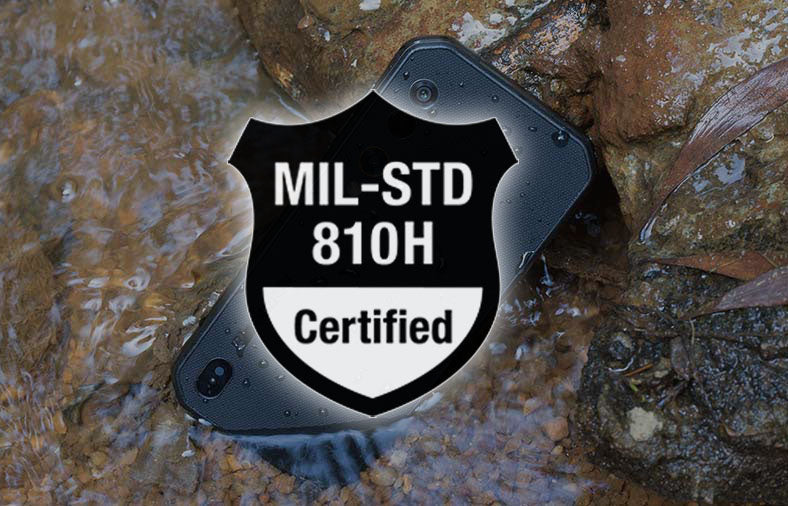
This is a military standard established by the U.S. Department of Defense, the most commonly used being MIL-STD-810G (some newer models may use the newer MIL-STD-810H), used to test the reliability of equipment in extreme environments.
Rugged phones that pass this certification must undergo several rigorous tests, including:
① Shock and Drop Resistance: Withstanding drops from a height of 1.5-3 meters onto a hard surface without damage to internal components.
② Extreme Temperature Resistance: Operating stably within a wide temperature range of -20°C to 60°C or even longer.
③ Other Tests: Including vibration resistance, salt spray corrosion resistance, humidity resistance, dust resistance, and solar radiation resistance, ensuring normal operation in harsh environments such as military and outdoor adventures.
It's important to note that MIL-STD certification is voluntary, and not all rugged phones are equipped with it. IP protection rating is a basic requirement for this category of phones.


Leave a comment
This site is protected by hCaptcha and the hCaptcha Privacy Policy and Terms of Service apply.